
The Employment (Coronavirus Special Leave) (Temporary Measures) Regulations, 2020
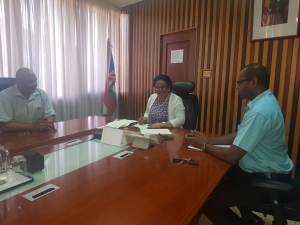
In the face of challenges being encountered by the world of work with the situation of the coronavirus pandemic, the Minister for Employment, Immigration and Civil Status, Myriam Telemaque, yesterday signed a law introducing a new category of leave for workers working in both the public and private sector. The Employment (Coronavirus Special Leave) (Temporary Measures) Regulations, 2020, that is already in force, allows workers to take special leave of absence from work in certain specific situations, such as to take care of their social responsibilities.
Working parents with children from the age of three and a half months to 14 years old who were in a relevant institution immediately before March 16 such as day care and the institution has closed temporarily, workers who are required to go into isolation or have contracted the virus and workers who works for businesses that have temporarily stopped operations fully or partially and their employers do not require their presence at work are entitled to take the special leave. This is applicable only as from March 16, 2020 until the Minister indicates an end date, by way of a notice published in the gazette. The leave is an entitlement on its own, which means that the employer cannot deduct the leave from a worker’s annual leave even though the worker has been on leave in connection with COVID-19 prior to the enactment of this new law.
The law applies to workers who are on a continuous contract or fixed-term or is working part-time. It also applies to non-Seychellois workers with a valid contract of employment and GOP who are in Seychelles on coming into force of this law.
The law does not apply to workers who are exempt from the application of the Employment Act 1995 and non-Seychellois workers with a valid contract of employment and GOP but who are outside Seychelles.
For the first category of workers, that is parents with children from the age of 3½ months to 14 years, those who qualify should have direct responsibility of the child and lives in the same household, for example the mother, father, step-mother or step-father. Only one parent can apply for the leave at a time for one or more children within the household. It is a punishable offence for a parent to make false declaration when applying for the special leave. If a worker falling within this category is denied the special leave by the employer, the worker has the right of appeal to the Minister.
Home caregivers and workers employed in the essential service such as a hospital or medical services, fire and rescue services, postal services, banking and financial services are not qualified to apply for leave in this category unless the employer allows the worker to take the special leave or their presence at work is not required.
For the second category of workers, that is those who are required by the health authorities to go into isolation or have contracted the virus, they are automatically entitled to the special leave but this has to be confirmed by the health authorities in writing to the employer at the time of release of the worker from isolation.
For the third category, the special leave is only applicable if the employer decides to stop operation of the business temporarily either fully or in part. It is the employer who will decide whether with the exigencies of its operation some workers may remain at home on special leave. In this particular situation, the employer may call back the worker at any time to resume duty and the worker cannot refuse. With this category, the same as the first category, the effective date of the special leave is on March 16 until the Minister indicates the end date in the gazette, which means that the worker is considered to have been on special leave from March 16, or any date thereafter thus no deduction from the annual leave can be done.
The Ministry has made available an application form for workers to complete when applying for the special leave, particularly workers falling in the first category applying for school or institutions closure. Employers are encouraged to use the form so that they can gather as much information as possible from the worker in case the necessity for disciplinary measures arise in the future. The form together with the Employment (Coronavirus Special Leave) (Temporary Measures) Regulations, 2020 can be downloaded from the Ministry’s website :www.employment.gov.sc. Members of the public are advised to visit our website or contact us on telephone No. 4297212/4297200 or email us on : This email address is being protected from spambots. You need JavaScript enabled to view it. for any queries.
Â
Contributed by the Ministry of Employment, Immigration and Civil Status
Working parents forced to take leave on account of COVID-19 will not lose out
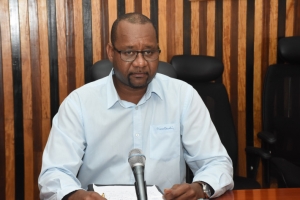
Leave taken from March 16 - 31, 2020 by working parents to stay with their children will not be deducted from their legal entitlement,†the principal secretary for employment Jules Baker has said.
Mr Baker said this yesterday while elaborating to the press on two decisions taken by the government regarding COVID-19. Firstly, the closure of public and private schools that has impacted severely on the number of working parents and secondly the three-month guaranteed salaries for all Seychellois and expat workers.
PS Baker explained that since the closure of schools, due to an emergency health situation caused by COVID-19, the working parents have been facing some unexpected situations.
“They necessarily had to go on leave to take care of their children. There was an outcry from employers over losing their staff who took time off. This decision was taken under the Public Health Emergency Regulation. In order to protect the working parents, the government has decided that leave taken as of March 16, 2020 to March 31, 2020 are not deducted from the workers’ legal entitlement. This decision applies to all parents who have children under 15 years of age and have been affected by the closure of schools, child care etc,†highlighted PS Baker.
“The parents are expected to stay home with their children and the working parent should make a choice as to who will stay home to take care of the children. All parents should notify their employers before just staying home. Employees cannot just decide that they will not come to work and all organisations are asked to make arrangements to communicate properly with their staff. No employer has the right to refuse leave to a parent whose child is below 15!â€
Regarding the payment of daycares and other services related to child care, the Ministry of Finance will come forward with measures.
PS Baker also noted that they are working with the Attorney General’s Office for help in drafting the appropriate regulations in terms of leave.
Following the announcement made by President Danny Faure on March 20 regarding guaranteeing three months’ salaries for both local and expatriate staff in the private sector, PS Baker noted that as from April 1, no leave will be deducted from any employees’ entitlement until further notice. All employees in all businesses will be assisted depending on the criteria set by the Ministry of Finance. PS Baker also noted that “the government will not approve any redundancy request during that period, unless the situation becomes worse and then we will relook at the factsâ€.
PS Baker reassured all employees that any person who cannot go to work because of COVID-19, their annual leave will not be affected. Decisions will be taken as the situation changes in the country and the Ministry of Employment is working closely with the private sector.
PS Baker also noted that many cases are being registered by the ministry regarding some steps taken by the employers. “Leave is mutually agreed and no employers can force their staff to take unpaid leave or forced leave. We strongly urge the employers to consult the Ministry of Employment as this situation is being caused by COVID-19 and we will assess each situation. We also ask the employers not to send the expat employees home as they are also part of our economy. The same principles and laws apply to the expat workers,†stressed PS Baker.
“The decisions are being made following strict guidance from the Ministry of Health and as we go along, we will decide on our next moves,†concluded PS Baker.
Vidya Gappy
COVID-19: Employment -No provisions to cater for employment amidst crisis
Jules Baker, Principal Secretary (PS) for Employment detailed some of the points put across from the Ministry of Employment during the economic forum on 16 March at State House. These included redundancy measures, school closure, leaves, relief schemes and work habits.
Jules Baker, PS for Employment admitted on 16 March that the COVID-19 crisis has a direct impact on employment. The PS said that a lot of employers are concerned and are wondering what procedures are planned in the eventuality if a massive redundancy, for instance. The latter is one of the issues brought forth by the Ministry of Employment at the economic forum. Baker stated, "We have notified the president concerning certain situations and concerns. President Faure has taken this into consideration and will make a public announcement before 31 March on a strategy to move for-ward with."
 The strategy should make provisions to reduce the possibility or cushion effects of a mass redundancy.          Â
When questioned by the press, Baker admitted that provisions had not previously been made for the eventuality of such a cri-sis; "[...] the government did not include in its budget funds for counter-measures and assistance’'
During the gathering at State House, the subject of school children being home-bound for 14 days was also raised, particularly the impact on parents. Baker talked about doing some research and coming out with statistics to ascertain how many parents are expected to be affected, both in the private and public sectors; "a strategy is being worked on."
Â
Another subject was for workers in quarantine. "The government takes this into consideration and a decision has been taken. All employers will pay their staff 14 days and the cost will be absorbed by the government’'
The PS for Employment also stated that sick leave was discussed with the Health Commissioner, Jude Gedeon. Baker in-formed that the authorities do not exactly know how long one person may take to recover; it depends on the individual. "We will take that into consideration, both employee and employers' perspectives’'
A strategic decision is also expected to follow through shortly regarding the amount of sick-leave days to be refunded.
The unemployment relief scheme (URS) is also to be re-viewed. For now, it is limited to those deemed 'challenged; These include people faced with social ills, drug problems, disabilities and such. Baker said, "The URS will be extended to include any worker that has been made redundant’'
Situations are arising in work-places due to fear and confusion, some employees in some instances refusing to work. The Minis-try of Employment informed the press that a notice will be released soon for employers on how to handle situations and on precautionary measures in the work-place.
 Stress was made on employers to communicate as much as possible to staff on their rights, responsibilities and to ensure safety for all.
A critical question from concerned workers is the possibility to work from home. Baker expressed that there are no provisions in our laws that cater for the possibility to work from home.
"We are working closely with CBS [the Central Bank of Seychelles] to assess the best way about this. Not everyone can work from home and there's a certain category of workers that do not necessarily need to be in the workplace. We are looking into criteria for a work at home scheme’'
The PS concluded, 'We need to ascertain if such workers will be paid a full salary, how annual leave will work, and ways to not affect workers' rights."
Â
by A. Laporte
Â
2019 SBSA graduation

Kelly Mathiot wins President’s Cup
 Kelly Mathiot has been awarded the President’s Cup and is one of the 136 students who have graduated after successfully completing 11 programmes offered by the School of Business Studies and Accounting at certificate, advanced certificate and diploma levels.
The School of Business Studies and Accounting’s (SBSA) 2019 graduation ceremony was held yesterday at the University of Seychelles’ theatre at Anse Royale, in the presence of students, parents and lecturers.
Also present at the event were Designated Minister Macsuzy Mondon; Education and Human Resource Development Minister Jeanne Simeon; Employment, Immigration and Civil Status Minister Myriam Telemaque; members of the National Assembly; principal secretaries; chief executives; members of the SBSA governing board; as well as representatives of various sponsors who collaborate with the school.
Kelly Mathiot clinched the President’s Cup for her outstanding performance in both her studies and extracurricular activities. She was presented with the cup by Designated Minister Mondon and Minister Simeon.
She also received a laptop from President Danny Faure, a scholarship from the Agency for National Human Resource Development (ANHRD) and prizes from member of the National Assembly for Mont Fleuri, Jean-François Ferrari; chairperson of the SBSA governing board Oliver Bastienne; Seychelles Commercial Bank; Absa Bank; Cable & Wireless; Fidelity Corporate Services; National Information Services Agency and Enterprise Seychelles Agency.
Kelly, who studied for a diploma in Business and Accounting, expressed how proud she is of herself to have managed to persevere through the three years and come out with the President’s Cup.
She plans to pursue further education in accounts and finance, specialising in forensic accounting at the Asia Pacific University in Malaysia.
This year 45 graduates received a diploma in Business Studies and Accounting, 46 got a diploma in Office Management and Administration. This will be the last cohorts that graduate from the two diploma programmes as they have come to the end of their validation period and the school has gained validation for two new updated diploma programmes.
Seventeen graduates also received certificates for having completed the Association of Accounting Technician (AAT) in-service courses, while eight graduates received their certificates upon completion of the basic training in QuickBooks Accounting Software, eight graduates also received certificate in Office Administration, and two got certificate in Business administration.
All full-time graduates received certificates for attaining an extra qualification through the Absa Ready to Work programme – which is a Pan African flagship initiative.
Under this programme, learners were able to achieve qualifications in work skills, people skills, money skills, and entrepreneurial skills.
Eleven prestigious awards were also presented to the SBSA graduates:
- Beverly Brioche won the Seychelles National Youth Council award;
- Shamelly Maria, best effort in Office Management and Administration;
- Adrianna Volcère, best effort in Business Studies and Accounting;
- Kysha Valentin, outstanding performer AAT Foundation Certificate in Accounting;
- Monica Benoit, outstanding performer AAT Advanced Diploma in Accounting;
- Rebecca Barra, outstanding performer in Office Management and Administration;
- Hannah Monthy, outstanding performer in Business and Accounting;
- Curtis Otar, outstanding performer in the ATT Exam;
- Shamelly Maria, outstanding performer in City and Guild exam;
- Steve Monnaie won the governing board award.
Addressing the graduates, SBSA director Josianne Bristol said success comes from hard work, perseverance, dedication and definitely from working together, pushing for the same goals.
She noted that SBSA continues to accomplish excellence in education, training and overall development of learners and that the successes this past year demonstrate the ability to grab all opportunities as much as they can.
“That is why we encourage, support and applaud their participation in various extra-curricular activities, be it sports, cultural or participation in forums and symposiums. With such exposure our learners build strong characters and extra skills that turn them into graduates ready to face the working environment and certainly the environment of higher education,†said Mrs Bristol.
“We have done our best to nurture you and fulfill your potentials. From here onwards, it is up to you to push forward for greater achievements. I know that life at SBSA has not been a garden of roses. But the challenges you have faced will only serve to make you stronger, to make you more equipped to face the bigger challenges yet to come,†she said.
Mrs Bristol also remarked that SBSA believes in the all-round development of its learners and because of this they have seen an increase in students who apply to the school as well as an increase in male applicants.
She further explained that 2019 was another year filled with accomplishments for the academy where the highlight was maintaining their title as the best professional centre at the annual Sports Awards ceremony for the sixth year running.
She also added that six percent of all learners received distinction in 2019, 22 percent passed their exams and only two percent failed. She further added that 57 graduates have been able to access the government-funded scholarships.
Shamelly Maria, who clinched two awards, said she is happy to have achieved excellence during her three years at SBSA and noted that her sole focus now is to apply to universities to further her studies.
At the end of the ceremony, a vote of thanks was read by Jeff Barbe who explained that it was not easy at all during the past three years, but with encouragement from lecturers, parents and with God’s grace they have succeeded and are now moving on to bigger and better things thanks to SBSA.
 Christophe Zialor
  
Kelly Mathiot, President Cup’s winner (Photo: Louis Toussaint)
Waso and partners observe International Women’s Day with conference
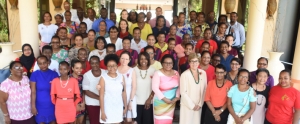
On the occasion of International Women’s Day, observed around the globe yesterday March 8, the Women in Action and Solidarity Organisation (Waso) in partnership with Double Tree by Hilton Seychelles Allamanda Resort and Spa on Saturday organised a half-day conference under the theme, ‘Advancing Women Rights for Empowerment, Development and Change’.
Grouping together some 70 plus women and men from all walks of life including high government officials, dignitaries, private stakeholders as well as civil society, the conference sought to educate attendees and get the ball rolling on discussions pertaining to women empowerment, the rights and responsibilities of women, as well as other issues touching on the women’s role in the Seychellois society, legal issues, gender and socio-economic issues for greater empowerment needed to ensure progressive change and gender equality.
In her opening address, chairperson of Waso, Rose-Mary Elizabeth, recounted the earliest efforts of women in 1906 to fight for their rights and demand gender equality, making reference to the mass marches and rallies around the world in subsequent years until 1975, when the United Nations (UN) organised the first World Conference on Women to focus solely on women’s issues and which has been touted as a significant turning point for the global agenda for gender equality.
Mrs Elizabeth went on to note the Beijing Declaration and Platform for Action at the Fourth World Conference on Women, held in Beijing, China in September 1995, whereby governments from around the world agreed on a comprehensive plan to achieve global legal equality and to reaffirm their commitment to women’s rights and empowerment.
Chairperson of Ceps (Citizens Engagement Platform Seychelles), Jude Fred, delivered the keynote address in which he noted that in Seychelles we are yet to strive for gender equality at all levels starting in the families and imploring families to treat their children as equals and in love, regardless of their gender.
“Nonetheless, we must acknowledge that in our society we have made great progress, for instance within the government, there is equal representation of male and female ministers. In 1995, there were no women in the judiciary but today, we have a female Chief Justice and she is very capable. The first and second Ombudsman were males but thereafter, we have known two female Ombudsman,†he noted.
“We are yet to strive for our women and girls’ rights to be respected in many other areas such as protection from abuse. We can no longer tolerate situations where our young girls are abused, and often by people close to them. We want to see women progressing socio-economically, politically and culturally,†Mr Fred said.
Numerous women who have excelled in their professional careers and other endeavours were also present to share their experiences with their fellow ladies through short presentations in which they highlighted their personal journeys, the values and principles they live by as well as words of advice for other women and young ladies. Among the ladies who took to centre stage were the resort manager of Double Tree by Hilton Allamanda Resort Doreen Valentin, Chief Justice of the Supreme Court of Seychelles Mathilda Twomey, Ombudswoman Nichole Tirant-Gherardi and chairperson of Enterprise Seychelles Agency (ESA) Marie-Celine Zialor.
Minister Counsellor of the Delegation of the EU to Mauritius and Seychelles, Carla Osorio, commended local efforts towards gender equality as is evident through gender parity in the cabinet.
“There is no place for second best. We women, we have our dignity, we have the right, and we will claim that right to equal treatment,†Mrs Osario concluded.
The conference, which was realised with the support of Ceps and the European Union (EU), was well appreciated by all who attended.
Â
Laura Pillay
Ministry of Employment, Immigration and Civil Status’ main achievements 2019
The year 2019 has been a busy year for our Ministry. Much has been achieved and this has been made possible thanks to the dedication of all the staff as well as solid collaborative approach adopted for many years now. It has not been without its fair share of challenges but we managed to push through and deliver on the majority of our targets.  We would like to share some of our main achievements with you members of the public and our service users so that you have a better appreciation and understanding of our role and the services we offer to ensure we continue to grow and develop as individuals and a country as a whole.
Â
Maintaining a low unemployment rate below the targeted 5% set for the year
 The unemployment rate for 2019 published quarterly by the National Bureau of Statistics were 3.6% (Q1), 3.5% (Q2) and 2.4% (Q3). This is thanks to the several programmes introduced by the Ministry over the years in order to preserve the Constitutional rights of all citizens to work. These include the SDP “Skills Development Programme†that targets people between the age of 15-30 years to gain skills or to be re-skilled in order to secure a job, the MFJ “My First Job†scheme that is specific for graduates from professional centres so that they can secure employment as soon as they complete their studies and the URS “Unemployment Relief Scheme†that has as its main focus to assist people relying on welfare, ex-convicts and others transition into gainful employment.  From January 2017 to December 2019,                  6736 citizens seeking employment have gone through one of those programmes, amongst which 4144 youth.Â
A new strategy introduced in 2019 was an outreach campaign through door to door visits conducted in 5 districts namely; Grand Anse Praslin, Anse Aux Pins Anse Royale, Pointe Larue and Mont Buxton. Through the activity a total of 179 jobseekers were registered out of which 43 have secured permanent employment. The others were referred under the different other programmes such as the SDP and URS.Â
The aim of the outreach campaign is to identify and register people in the community who are unemployed; with the intention of getting them into employment in order to earn an income. The campaign also brings visibility of other programmes that exist within the Ministry. Through the door-to-door exercise, the Ministry has been able to change the livelihood of families that were in dire need.
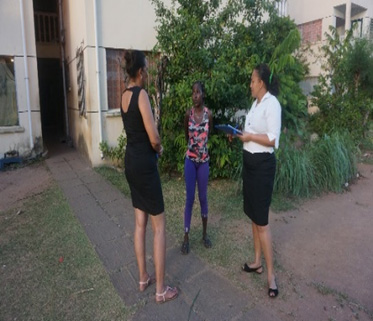
Door-to-Door visits in district
Â
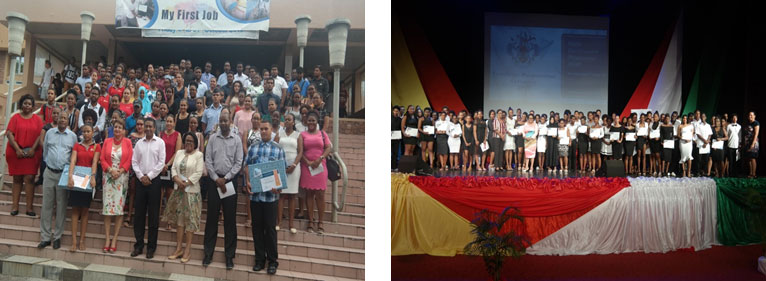
“My First Job†scheme graduation on 14thOctober 2019             Skills Development Programme (SDP) graduation 08th November 2019
Â
Introduction of new legislation targeting specific areas of work
Â
Following several requests and after properly assessing the requirements, in 2019 the Ministry introduced new legislation for specific types of work in order to provide required level of protection for the workers. The norm has always been for all work to be covered under one law but this step was necessary as our labour market develops and in keeping with our international obligations. As we continue to evolve and specific studies are undertaken to assess the needs others will follow.
Â
The first law that was introduced was the Employment (Conditions of Employment of Domestic Workers) Regulations, 2019 published in June 2019. Decent work for domestic workers means recognizing that they are real workers, that is, like other workers with labour rights. This entails acknowledging the proximity and personal relationship between them and their employer, while reaffirming the compatibility of domestic work with the employment relationship. The newly introduced law aims at providing minimum protection to a workforce that has long been playing a valuable role in families and societies. Most often they earn low wages and work for long, unlimited hours, lack social security coverage, do not belong to a workers‘ organization or trade union, and are vulnerable to abuse and harassment. The law, amongst other provisions, provides for minimum employment age being 18, daily rest period of 10 hours, standards of accommodation for live-in domestic workers.
The second law introduced in September 2019 was the Employment (Stevedore Conditions of Employment) Regulations, 2019. In a series of events, a group of stevedores from a commercial stevedoring company, initiated work stoppage asking for improvement in their welfare and pay. The stevedores were also seeking for better terms including remuneration for years of service with the company. Following these events, consultative meetings were undertaken with relevant stakeholders in order to introduce legislation to encourage the regularization of this particular work, the stabilization of incomes and other measures related to the conditions of work and living standards of stevedores in our country. With the introduction of the law, stevedores are now able to benefit from an annual gratuity and their tonnage rate provided by law, including other provisions.
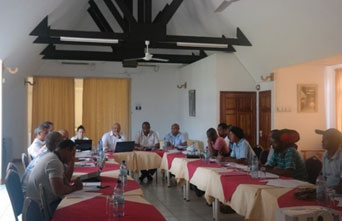
Consultative meetings held with Stevedores and relevant stakeholders and partners
Â
Monitoring of employment conditions in support of good industrial relations and safety at work
Â
Workplace inspections are conducted on a daily basis to verify compliance with the Employment laws as well as Health and Safety legislation. The types of visits conducted are routine visits, follow up visits and investigations. Cases of compliance and non-compliance are detected through the different visits conducted in the various sectors of Industry whereas for investigations reports are received through phone calls including through the Hotline (Tel. 2804041) introduced in 2019 or aggrieved persons visiting our office.
Â
For 2019, a total of 501 visits were conducted in different organizations on Mahe, Praslin and La Digue, routine Inspection 263, follow-ups 144 and investigation 94. Of the total visits, 138 were found to be in contradiction to employment and safety laws. 81 organizations complied after notice was issued whereas the remaining 57 are still within the deadline given to comply save for 8 that prosecution has been initiated.
Â
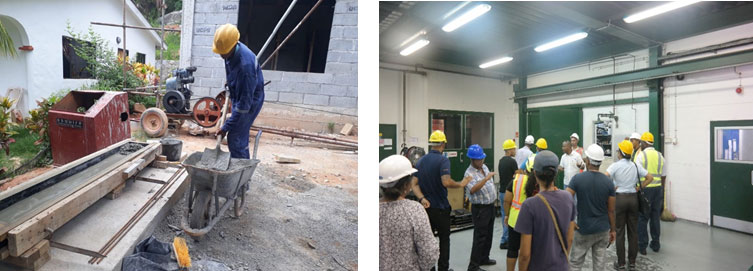
Workplace visits
Â
Law review in support of productivity enhancement at work
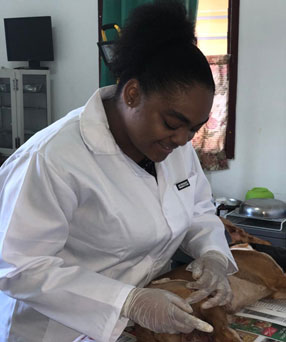
In addition to the yearly promotion of productivity at work through many activities at national level in several working organizations, public and private, the Ministry brought about changes to the law in 2019 in support of this very important aspect of our working life that impacts on our well-being and our country’s economy.   Seychelles was amongst the countries with the highest number of days in sick leave awarded to workers yearly. For many years now employers have been asking for changes to be made in order to curtail on abuse by the workers.  Through a study undertaken in 2014/2015 to assess the level of productivity in the country, although not on a large scale, absenteeism due to sick leave was found to be the main culprit affecting productivity for employing organizations. In response to the call being made by employers, the Ministry brought about an amendment to the law reducing the number of days of sick leave from 30 days to 21 days, except for working parents with children of 12 years and below who have been given an additional 7 days to care for their sick child. The change was very much welcomed by employers and workers’ representative alike.
Â
First ever National Labour Migration Policy adopted for Seychelles

For the first time in our history Seychelles has a policy providing a framework on the effective management of recruitment of non-Seychellois workers in our country. Demand for labour continues to rise therefore the need to consolidate existing legislation, policies and procedures in this single framework in order to properly manage recruitment and address challenging areas. The NLMP is structured around four key areas of intervention with the following objectives:
- Governance of labour migration - To ensure effective institutions, procedures, and regulations are in place to govern labour migration based on reliable data and broad stakeholder participation.
- Protection of the rights of all workers - To protect the rights of migrant workers and uphold high standards of working conditions for all
- Attracting, retaining and developing skills - To ensure the right mix of skills is available in the Seychelles in order to meet labour market needs and promote productive and sustainable employment for all workers.
- Fair and effective recruitment - To promote fair and effective recruitment practices for all workers.
The policy was adopted in August 2019 and its implementation will be effected through an Action Plan providing stakeholders’ responsibility with clear actions and timeframe.Â
 Â
Localisation of 80 positions at supervisory and managerial level in private organiztions
 The Ministry continues in its stride to ensure that companies identify locals where possible to understudy positions occupied by Non-Seychellois and under the monitoring of the Localisation programme eventually gain the necessary training and experience to take over these positions. As at December 2019, the Ministry recorded a total of 80 positions localised out of 286 registered on the programme. The posts localized were mainly from the Tourism industry at managerial and supervisory level.
 In recognition of the efforts being made by various establishments to partake in the Localisation programme, the Ministry gave some publicity to establishments documenting their good practices and acclaimed staff who had successfully localised posts in several tourism establishments. This was done through a televised programme in May 2019 and two publications in the Seychelles Nation, one in October and the other November 2019.
Â
Bilateral Labour Agreement signed with the Government of Bangladesh
Â
On 21 October 2019, the Government of Seychelles signed a Bilateral Labour Agreement with the People’s Republic of Bangladesh. The signature of the labour agreement serves to emphasise the mutual interest of both Governments, to ensure protection of the rights of the Bangladeshi workers, their welfare and good working and living conditions while in employment in Seychelles. This is the first labour agreement between the two countries and it will be for a period of 4 years renewable.
Â
It is to be noted that a moratorium on the recruitment of workers from Bangladesh was imposed in October 2018 in the midst of certain unsavoury recruitment practices that were being experienced. Once the Agreement was signed the moratorium was lifted and working organisations in Seychelles were able to start recruiting from there once more.  The Agreement creates a framework to enable ethical recruitment practices and clearly establish the obligations of Seychellois employers, Bangladeshi workers and the authorities in both countries. The Ministry therefore does not expect there to be any more issues with recruitment from that country. The same approach will be adopted in the future with other supplying countries such as India, Sri Lanka, Kenya, Madagascar, Mauritius, Nepal starting with India in 2020, where discussions with the Embassy based in Seychelles have already started.
                                                                                       Â
 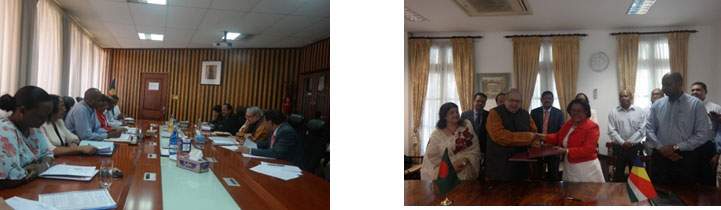
 Technical Meeting                                                                                          Signing of Bilateral Agreement
 Hosted labour conference for African small island states
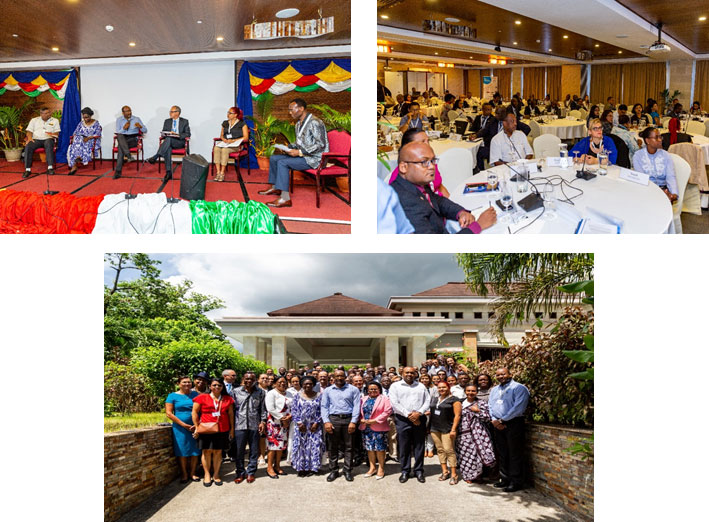
To commemorate the 100 year existence of the International Labour Organization (ILO) and its 60 years in Africa, Seychelles was chosen to host a conference on “Creating a Sustainable Future of Work and a Just Transition towards Blue Economy in African Island States,†in May 2019. The participating countries were Cabo Verde, Comoros, Guinea Bissau, Madagascar, Mauritius, Sao Tomé and Principe, and the Seychelles. There were also observers from Mozambique and Namibia. Also present were representatives from the African Development Bank, the African Island States Secretariat, the Indian Ocean Commission, the International Organisation of La Francophonie, the Southern African Development Community, UNESCO, and Embassy of Japan to Seychelles. The purpose of the meeting was to share experiences and identify challenges and opportunities of the Blue Economy and its job creation potential across African Island States, also in line with the ILO Global Commission Report on the Future of Work. The outcomes of the conference were echoed at international meetings attended by Seychelles delegation, mainly the UN Climate Change Summit in September 2019 and the ILO 14th African Regional Meeting held in December 2019. The agreed outcomes of the conference were:
- Approaches to better integrate youth into the blue economy
- Strengthening investment in the blue economy
- Ensuring fair migration
- Promoting the transition from the informal to the formal economy
 Â
Compliance with international reporting obligations
 In line with its obligation as a member state of the International Labour Organization (ILO), Seychelles submitted all reports due in 2019 on ratified Conventions as per Article 22 of the ILO Constitution. The reports provided information on national laws, practices, statistics and challenges on the subjects requested and it is an opportunity to obtain the support of the ILO. The reports were based on the following ILO Conventions:
Forced Labour Convention, 1930 (No. 29)
Abolition of Forced Labour Convention, 1957 (No. 105)
Minimum Age Convention, 1973 (No. 138)
Worst Forms of Child Labour Convention, 1999 (No. 182)
Labour Inspection Convention, 1947 (No. 81)
Â
The report on unratified ILO Conventions due in 2019 was also submitted to the ILO in accordance with Article 19 of its Constitution. This time, this report provides information on a group of Conventions not ratified by Seychelles, with anticipation for future ratification, based on the challenges highlighted. The report was based on the Employment Policy Convention, 1964 (No. 122); Vocational Rehabilitation and Employment (Disabled Persons) Convention, 1983 (No. 159); Home Work Convention, 1996 (No. 177); Vocational Rehabilitation and Employment (Disabled Persons) Recommendation, 1983 (No. 168); Employment Policy (Supplementary Provisions) Recommendation, 1984 (No. 169); Home Work Recommendation, 1996 (No. 184); Employment Relationship Recommendation, 2006 (No. 198) and; Transition from the Informal to the Formal Economy Recommendation, 2015 (No. 204).
The following list of ILO instruments was also submitted to the ILO as per its Constitutional obligation for member states to submit to national competent authority, the instruments adopted by the ILO Conference. The Recommendations are not legally binding and not applicable for ratification, however they serve as guidance to member states for best practices and legal framework. In 2019, the Ministry submitted the following six instruments to ILO:
R.193 - Promotion of Cooperatives Recommendation, 2002
R.195 - Human Resources Development Recommendation, 2004
R.198 - Employment Relationship Recommendation, 2006
R.200 - HIV and AIDS Recommendation, 2010
R.202 - Social Protection Floors Recommendation, 2012
R.204 - Transition Informal Formal Economy, 2015
Â
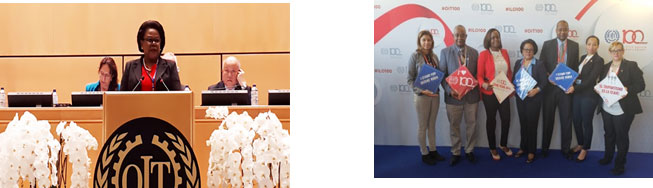
International Labour Conference in Geneva, Switzerland
 Â
Â
 Conclusion
 The Ministry would like to thank its partners and all stakeholders for their support throughout 2019 and looks forward to the continued collaboration in 2020, moving forward in our drive for progress for the betterment of our people and country’s economy. We welcome your contributions in any shape or form. Please contact us:
Â
Main office: Independence House, Independence Avenue, P.O. Box 1097, Victoria, Mahe.                    Â
Tel: 4297200, email: This email address is being protected from spambots. You need JavaScript enabled to view it. website: http://www.employment.gov.sc
Praslin office: Pension fund Complex, Room 16, Grand Anse Praslin
Tel: 4232031
La Digue office: Pension Fund Building, La Passe, La Digue
Tel: 4234052
CONTRIBUTED BY:Â Â Ministry of Employment, Immigration and Civil Status
Employment department’s website gets new look

After nearly two months working in close collaboration with a local web designer, the website of employment department under the Ministry of Employment, Immigration and Civil Status has a new appearance.
In a press release the ministry has said that in its continued effort to support and sustain employment in Seychelles, the employment department has found it necessary to undertake a facelift of its website to keep members of the public well informed and up to date with different matters related to labour and employment.
“Over time we have listened and your feedback has helped us improve. We hope that we have captured all in one from not just being informative but also being friendly and practicable,†the press release said.
You can visit the website at www.employment.gov.sc
The accompanying pictures show Employment, Immigration and Civil Status Minister Myriam Télémaque and the employment department team meeting to finalise the development of the website
Â
Contributed by the Employment, Immigration and Civil Status
Â
Second Tourism Employee of the Year award ceremony
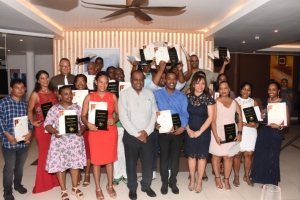
The second Tourism Employee of the Year award ceremony was held last Friday where, compared to the first edition where 14 employees were rewarded, this time 22 employees were honoured from 22 tourism establishments.
This award aims to give recognition to employees in the hotel industry who are doing their utmost to deliver an excellent service. This award ceremony was launched in 2018 by the Ministry of Tourism, Civil Aviation, Ports and Marine where 14 employees from 14 establishments were recognised in the presence of the Minister for Employment and the Minister for Tourism. This year, 22 establishments – both small and large, forming part of our inner and outer islands – took part in this event.
The Minister for Tourism, Civil Aviation, Ports and Marine, Didier Dogley and the principal secretary Anne Lafortune together with the general managers and staff of the different hotels attended this event.
During the event, Minister Dogley talked about the 6% increase in visitor arrivals in 2019 compared to 2018 and noted that the “vulnerability of Seychelles to external forces such as the outbreak of diseases like the coronavirus, decisions taken at international level such as Brexit, the impact of climate change and sea-level rise have powerful impacts on our tourism industryâ€.
He further highlighted the importance of the human resource as an asset to the successful development of the tourism industry.
“We need to continue to invest in the quality training of the locals who wish to take up a career in the tourism industry. Nevertheless, the teaching and refinement of skills alone is inadequate to mould a desirable workforce for the tourism industry. This should be driven by a national agenda aimed at inculcating a sense of patriotism in our people and a deep-rooted appreciation for our tourism industry.â€
Minister Dogley commended the campaigns launched by the Seychelles Hospitality and Tourism Association and the launching of tourism clubs in the schools.
He also urged all the hotel managers and human resources to set the bar high in terms of employing, training and nurturing their workforce.
“The government is working to ensure that tourism remains the pillar of the economy and that all Seychellois may reap the benefits of this industry,†concluded the minister.
Addressing the winners, PS Lafortune noted that “today you serve as a good role model for other service staff to emulate and to uphold the standard of the hotel industry. Your continuous strive for service excellence is all the more important as the Seychelles hospitality industry continues to boom.
Rica Bonne, best employee from Hilton Labriz Resort and Spa, said that without her colleagues and her general manager she would have never made it.
“I am so proud of myself and my family is so proud of me. With Hilton I am really growing. It’s been only one and a half years that I joined Hilton and was also chosen as female leader of the year 2019. This month I will be attending a conference in South Africa on ‘Women in leadership’ sponsored by the hotel. I started as a trainee cook under the scheme of the Ministry of Employment then moved to an accountant clerk, then moved to an HR clerk on Ste Anne Resort Beachcomber and then promoted as HR assistant and once Ste Anne Resort went under renovation I moved to Hilton. I would advise the youth that if you have determination and willingness you will succeed in the hotel industry. Seize your chance.â€
The winners are as follows:
Hotel Establishments | Name of Employee of the Year |
| Julia Rose |
| Joanne Simara |
| Ginnie Havelock |
| Simianne Julienne |
| Paul Tirant                                              |
| Francis Ferley |
| Madeleine Moutou  |
| LydaniaEmerith |
| Wilson Volcere |
| Annia Constance |
| Lorna Bonne |
| Joana Sabury |
| Lenny Alphonse |
| Terry Simeon |
| Rica Bonne |
| Jude Mondon |
| Kim Payet |
| Mike Confiance |
| Richard Ndhlovu |
| Samantha Antoine |
| Girlie Dugasse |
| Barat Sarkar |
Â
Vidya Gappy
Â
Employment ministry organises fifth annual job fair

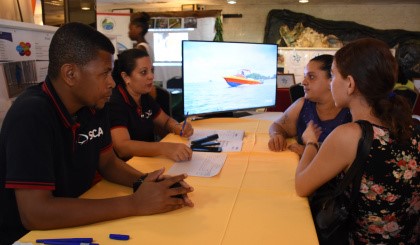
The Ministry of Employment, Immigration and Civil Status organised its fifth ‘My First Job Fair’ yesterday at ICCS in Victoria.
The ‘My First Job’ programme was launched in 2016 with the aim of helping young graduates from the professional centres to secure employment, as soon as they exit their respective schools, as well as to assist those who wish to venture into entrepreneurship.
To date over 2084 graduates have secured employment, of whom 39 have made remarkable progress in their career paths and have been promoted to occupy higher positions in their respective organisations.
As is usually the case, over 44 organisations needing manpower had submitted their lists of jobs so that the freshly graduated from post-secondary schools could have a look at the options available to them.
The fair had the participation of companies such as the Seychelles Civil Aviation Authority, Kempinski Hotel, Le Relax Hotel Ascent projects, Absa limited, the judiciary and many more.
“This fair is mainly for students who have completed their studies at post-secondary level, it serves as an opportunity for them to browse different organisations that are looking for young employees,†said Letimie Dookley, director general of employment and promotion at the Ministry of Employment.
Ms Dookley added that once these graduates are employed, the ministry does a follow up for one year to monitor their progress in the work place.
“The government has provided a 40% incentive on each student’s salary for the one year under the scheme,†said Ms Dookley.
In 2019 alone, the ministry registered six hundred and sixty-five students under the employment scheme.
Stephanie Rigodon, the human resource officer for Allied Builders and Le Relax hotels, noted that Allied Builders has thirty five vacancies for various sections while Le Relax has four vacancies.
“We are advertising our positions for new graduates; however, if there are skilled workers interested we will very much welcome them,†said Ms Rigodon.
She noted that one challenge they face with graduates most of the time is their lack of interest for the job itself. However the HR officer remarked that they do have some motivated workers that they hired at past fairs still with the company.
Ascent Projects, which was being represented by Caraline Ruchends, noted that the company has vacancies in four companies that fall under Ascent Projects.
“In the past, we took a few students, however most of them don’t stay long either to pursue another career or further education,†said Ms Ruchends.
She noted that one challenge they have is the lack of commitment as they don’t complete their training.
Companies were not the only ones recruiting at the fair as the University of Seychelles were also there to display their courses on offer for undergraduate programme.
“We participate every year to showcase our training courses that we offer at the university,†Monica Françoise, the marketing executive for UniSey, said.
The Seychelles Civil Aviation Authority (SCAA) was one of the dedicated companies that has been participating in the fair for years.
Paul Quatre, the SCAA recruitment officer, said that the goal of the company is to hire as many Seychellois workers as they can.
“Usually we don’t target a lot of students as we have certain criteria we are looking for and most students don’t like to work shifts,†noted Mr Quatre.
He also echoed some of the same challenges that the other companies face in terms of graduates only wanting a career and not a job.
Nineteen-year-old SBSA graduate Ashley Bastienne said she came to the fair with the aim of finding a job as soon as possible and she was satisfied as there were many vacancies for her to choose from.
She noted that this fair is a good initiative as choosing a first job can be intimidating and this process makes it so much easier.
Since the scheme’s inception, the government has spent R10 million on it so far.
The accompanying photos by our photographer Jude Morel show some highlights of the fair.
 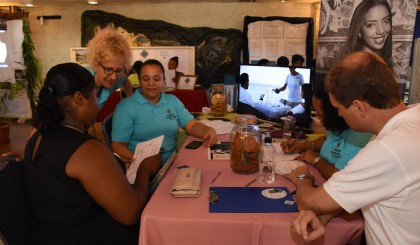  Â
  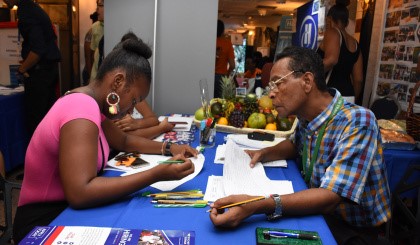   Â
  Â
 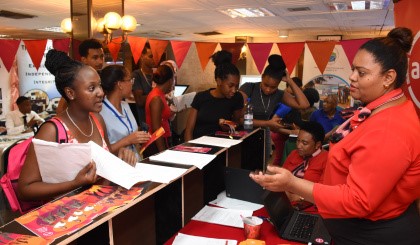  Â
Christophe Zialor
Â
Â
Â
Employment minister, key officials give details on President Faure’s SONA announcements
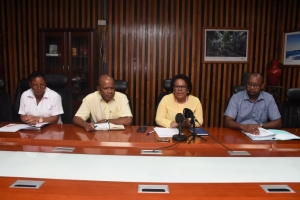
Following President Danny Faure’s announcements in relation to increases in certain categories of the gainful occupation permit, financial contribution of foreign workers to the local pension scheme, among others, employment minister and her team have given more details on the declarations.
This was during a meeting with the media on Tuesday afternoon.
Employment, Immigration and Civil Status Minister Myriam Télémaque reminded everyone present that the Minister for Finance, Trade, Investment and Economic Planning Maurice Loustau-Lalanne announced the introduction of two categories of gainful occupation permit (GOP) fees in his budget speech last year to take effect in 2020:
- For non-Seychellois employees who are in the country for more than six years, the fee was to be increased from R500 to R1,000 per month;
- For non-Seychellois employees who are in the country for more than 10 years, the fee will be increased from R500 to R5,000 per month.
But in his state-of-the-nation address last week, President Danny Faure reviewed the announcement made in the budget. He noted that “the private sector expressed their concerns with this increase they felt was too high. We listened, and we have decided that GOP rates for foreign workers working in Seychelles for less than 12 years will stay at R500. The GOP rate for foreign workers employed in Seychelles for more than 12 years will be R2,000 a month from March 1 this year. The GOP rate for live-in carers and domestic workers will remain at R500 a month irrespective of the number of years.â€
It is to be recalled that the last increase in GOP fees was in 2016.
Minister Télémaque explained that in relation to the foreign live-in carers and domestic workers whose number is less than 300 currently, the government has decided not to touch this category of workers in the spirit of compassion as these workers work closely with disabled, old people who need care and attention on a 24-hour and seven days a week basis and have therefore well integrated and form part of the families they work for.
Erica Dufresne, principal immigration officer, explained that with the review they are not expecting any major changes in the GOP application and renewal processes. She noted that it is mainly the verification and monitoring process to ensure the length of service of the foreign workers has been correctly calculated that will need to be stepped up.
“The DICT (department of information communication and technology) has worked on a programme which will capture all foreign workers in the country onto a system which will automatically indicate the length of time a particular worker has been here once his or her name is entered,†Ms Dufresne explained.
She went on to add that this will help officers reduce the amount of time spent on the process.
“We are not anticipating that this new process will impact on the time limit to deliver on the permits which remains one to five days,†added Ms Dufresne.
She also said that immigration employees are currently undergoing training to familiarise themselves with the new monitoring system in preparation to kick starting in March.
Meanwhile in relation to the government’s introduction, several years back, of a plan to localise certain posts occupied by foreign workers, the president has recognised that its implementation has been marred by many challenges.
He noted in his SONA that in spite of many years of investment by government in human resource development, today we still see certain categories of Seychellois professionals with the required skills and experience not occupying key positions in big companies. As a result, he announced that the government has decided that as from May 1 this year, for certain key posts in big companies, the GOP rate will increase to R5,000 a month.
This measure will apply only to big companies with a revenue of over R50 million a year. With regard to this announcement, Minister Télémaque told the press that more details will be made available as soon as they have finalised all the details of the different posts.
Meanwhile, as highlighted in its Labour Migration Policy, the quota system for recruiting construction workers has also been reviewed and therefore seen a remarkable increase and Minister Télémaque said this will no longer be decided on a percentage but on a figure basis. The review will take effect as from March 15.
Explaining the related process put in place to be followed, principal secretary for employment Jules Baker detailed that it has been some time now since national consultations at various levels have been taking place to come to an agreement as how best to allocate foreign workers in different sectors of the country’s economy.
“In all the discussions the quota system introduced in 2014 has been the sticking point, thus leading the ministry and its different partners and stakeholders to review the needs and demands of each sector individually,†PS Baker affirmed.
For the construction sector, for instance, PS Baker said there were lots of discussions and the companies aired their concerns and challenges they face to recruit on the local market, to compete for tenders for different national projects among various other related issues as the quota system then was 75% for companies in class one, 70% for those in class two, 60% for class three and 50% for class four.
With the increase in economic development in the country, PS Baker said the ministry after intense consultations decided to reconsider the quota system in numbers instead of percentage as follows: Class one up to 300 foreign workers, class two 150 foreign workers, class three 75 and class four 40 foreign employees.
PS Baker noted that this review has been well received by the construction sector.
But PS Baker stressed that the ministry will have a mechanism in place under the Labour Migration Policy to ensure that companies employ Seychellois workers alongside their specific quotas of foreign employees.
Meanwhile, PS Baker also noted that work is underway to finalise a quota system for other sectors.
With regard to the president’s announcement that as from June 1 this year, foreign workers will also contribute 3% of their salary to the Seychelles Pension Fund (SPF) and will in return receive 25% of their contributions when they stop working in Seychelles, Minister Télémaque told the press that for the time being her ministry cannot make any comments as they need to work on the right mechanism with the Ministry of Finance, Trade, Investment and Economic Planning as well as the SPF.
Concerning the issue of compensation for stevedores, Minister Télémaque said this also is an issue which is yet to be finalised.
Marie-Anne Lepathy
Complements of Seychelles NATION